

Anyone Can Now Build an AI Influencer. Should Your Brand?


Meet the newest creator in your niche. She posts every day, never has a bad hair day, jumps on every trend within hours, and yes… she’s a robot. AI influencers like her are now easy to make, because new tools let anyone design a consistent digital persona and drop it into popular video formats in minutes. But, not everyone is in favor of AI influencers.
The launch of one such AI influencer tool set off a loud argument online. Some people saw a money machine. Others saw the end of trust on social media, and a few just wanted to know where the realistic coat physics came from.
My first reaction was somewhere in the middle. I love anything that makes creative testing faster, yet I also know how quickly audiences turn on a brand that feels like it’s faking it.
So should your company build one, hire one, or quietly back away from the ring light? This depends on what you plan to use it for.
Below, you’ll find what each side of the debate gets right about AI influencers, the disclosure rules you can’t ignore, and a low-risk way to test the idea before you bet your brand on a made-up face.
TL;DR
- AI influencers are digital personas built with generative video. They keep the same face and style across posts, and creators can place them into trending formats without filming anything.
- The money case centers on ad creative. Many supporters see AI personas as a cheaper source of UGC-style ads for brands, more than as stars with loyal audiences.
- Trust is the biggest risk. Critics worry about a feed full of fake people and video that no longer counts as evidence, which can backfire on brands that hide what they use.
- Disclose clearly and test small. Label AI content, avoid fake personal testimonials, and compare a few AI-made ads against human creator ads before you scale.
What Is an AI Influencer?
An AI influencer is a social media persona whose face, voice, and videos are generated by AI. Nobody sits in front of a camera. A creator designs the character once, then uses AI video tools to place it in new scenes and trends.
Two related terms help here.
- Virtual influencers are the older version of the idea, usually built with 3D animation by studios.
- UGC ads (user-generated content ads) are product videos that look like a regular person filmed them on a phone, which is the style many AI personas now copy.
The newest tools combine those ideas. Consistent characters plus trend templates make it cheap to produce a steady stream of UGC-style videos. This is why marketers are paying attention, and why the reaction has been so split.
The Debate Over AI Influencers, Camp by Camp
Reactions fell into four clear camps. Each one has a point that matters for your brand.
1. Opportunists: “Sell Ads to Brands”
The loudest group saw a business model. Posts described creating a character, recreating viral UGC formats with it, and selling the resulting ads to direct-to-consumer brands. Others pitched running many character variations of the same ad to find a winner.
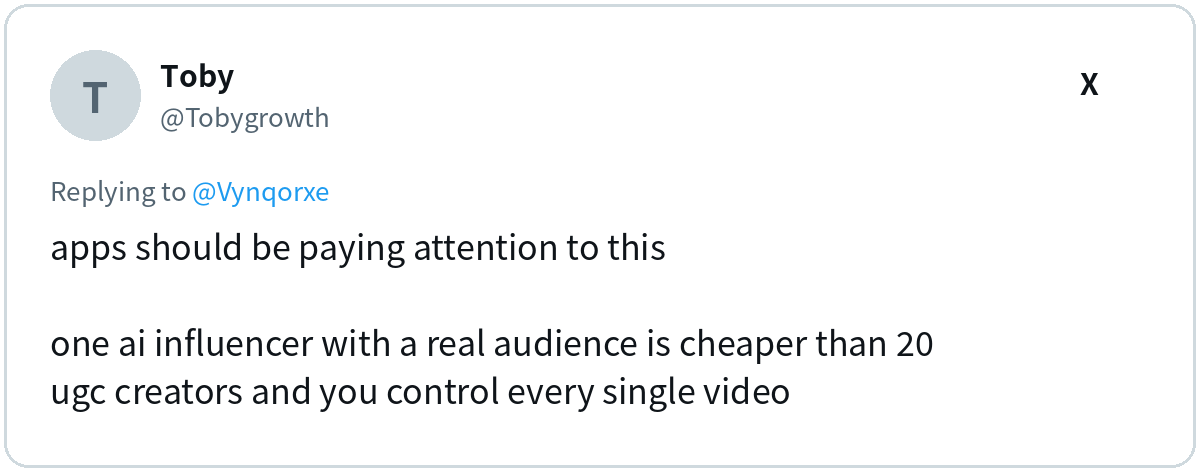
My team’s view at Single Grain: the creative-testing angle is the real value. Variations are cheap, so you can learn which hooks and formats work faster. The audience-building angle is far shakier, because followers can leave the moment they feel tricked.
2. Worriers: “Dead Internet Theory”
A second camp reacted with alarm. “Dead internet theory” (the idea of much of what you see online is made by bots) came up again and again. Some called the trend dystopian, and one person simply wrote, “Scary time is coming ahead.”
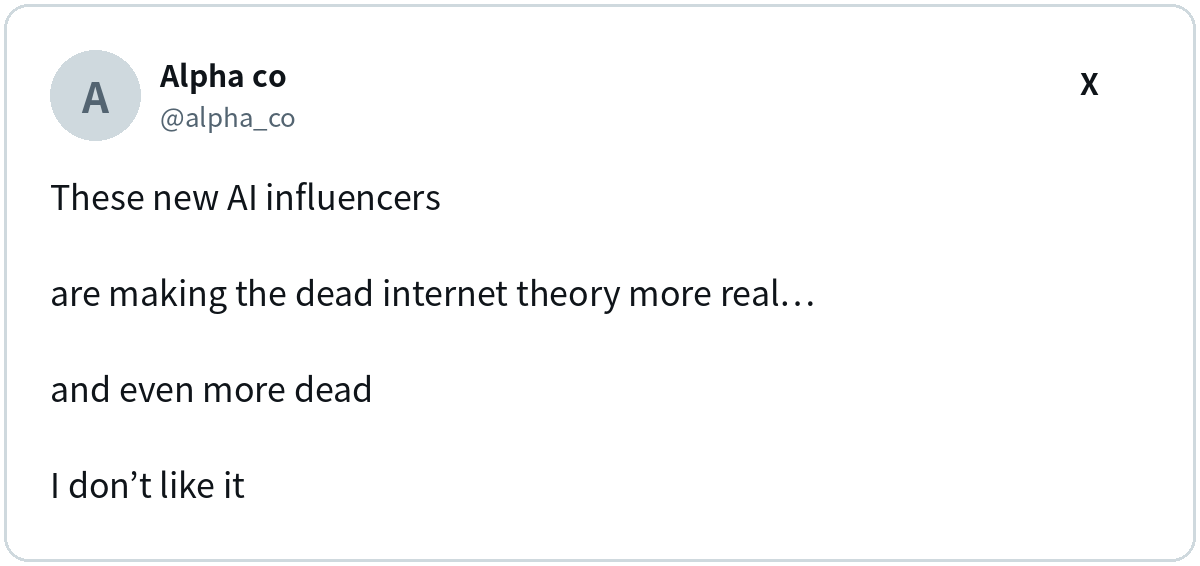
Brands should take this mood seriously. People who feel surrounded by synthetic content tend to reward accounts that feel unmistakably human. Your founder, your customers, and your team on camera may become more valuable as AI personas spread.
3. Video Skeptics: Can You Still Believe What You See?
A sharper critique looked past influencers entirely. Several posts argued realistic character swaps undermine the basic trust people place in video.
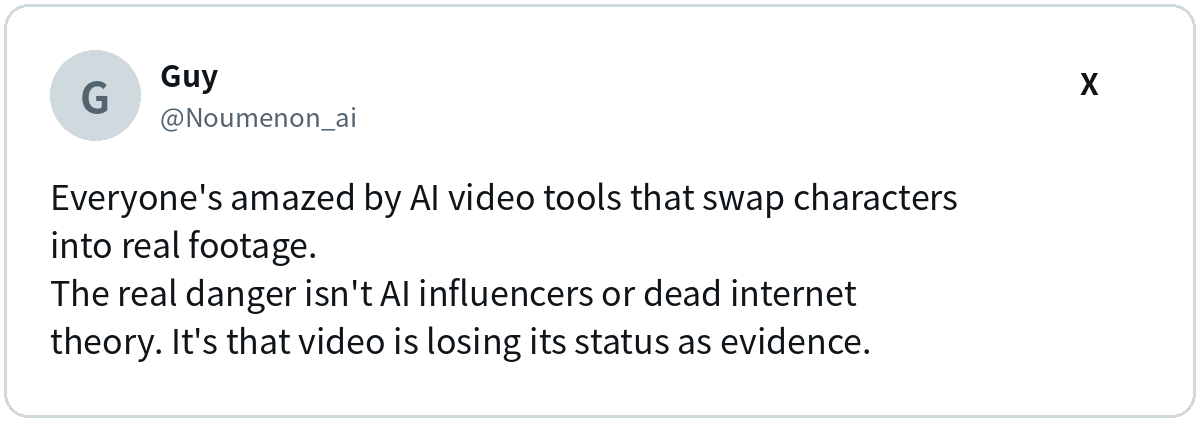
For marketers, this hits testimonials hardest. A product demo viewers suspect is fabricated loses its persuasive power. Proof that is hard to fake, such as named customer reviews, real case results, and live demos, gains weight.
4. Fans: “It Looks So Real”
Plenty of people were simply impressed. Replies praised the realism, with one viewer saying the coat whipping around on a cliff edge looked so real they watched it twice. Some creators quickly launched their own characters to test the trend.
Realism is exactly why disclosure matters. When viewers can’t tell the difference, the label carries the full burden of honesty.
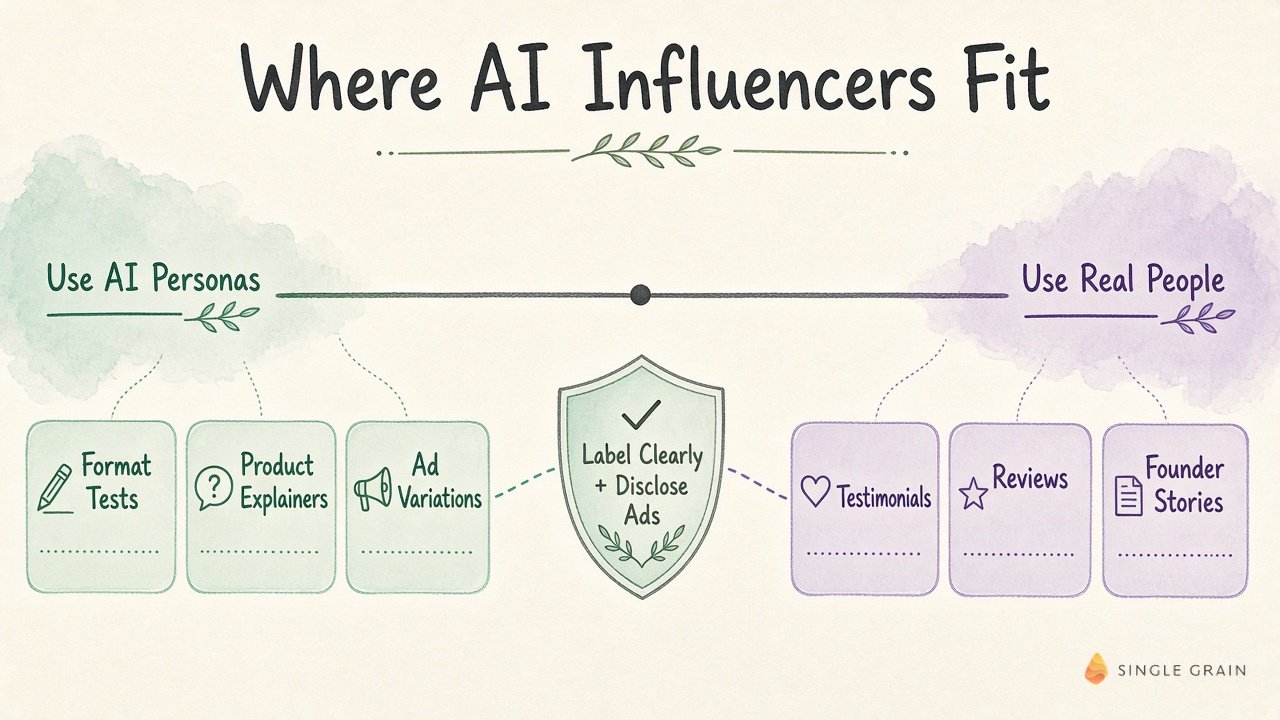
A simple way to decide is to place each content type on a scale. Format tests, product explainers, and ad variations sit on the AI persona side. Testimonials, reviews, and founder stories belong to real people, and clear labels plus ad disclosure apply to everything in between.
| Pro-Tip |
|---|
| Use AI personas for product explainers and format tests, and keep real customers for testimonials. This split keeps the speed benefits while protecting the trust reviews depend on. |
Disclosure Rules Brands Can’t Skip
Regulators and platforms already set expectations here. The FTC’s Disclosures 101 for Social Media Influencers says paid relationships must be disclosed clearly, inside the post or video itself. This same guide says endorsers can’t describe experience with a product they haven’t tried, which raises hard questions for a character that has never used anything.
Platforms add their own layer.
TikTok, for example, explains how creators should label AI-generated content that shows realistic scenes or people. A safe checklist for any AI persona campaign:
- Label the persona as AI in the profile and on each video, where viewers will see it.
- Disclose the brand deal with plain words like “ad” or “sponsored.”
- Avoid first-person experience claims such as “this cleared my skin.” Show features and real customer results instead.
- Keep proof for every claim the video makes, exactly as you would for a human creator.
If you are weighing personas for B2B, this look at virtual influencers in enterprise marketing covers how buyers in longer sales cycles respond.
A Low-Risk Way to Test AI Influencers
You don’t need to launch a full persona to learn something. Run a small, controlled ad test instead.
- Pick one product and one proven hook. Use a message that already converts with human creators.
- Make a few labeled AI versions. Vary the character and setting while keeping the script the same.
- Run them beside your human creator ads. Compare cost per click, conversion rate, and comment sentiment.
- Read the comments closely. Watch for “is this AI?” reactions, since distrust shows up there before it shows up in your metrics.
Keep in mind that human creators still have a role in this comparison! Your best partners are worth keeping close while you experiment, and paying creators a monthly retainer is one way to do it.
| Starter prompt for an AI persona ad script |
|---|
| Write a 20-second UGC-style ad script for [product] spoken by a clearly labeled AI host. Open with this proven hook: [hook]. Describe features and real customer results only, avoid any first-person claim of using the product, and end with a simple call to action. |
Use AI Influencers for Speed, and Humans for Trust
AI influencers can make ad testing faster and cheaper. They also arrive at a moment when audiences are wary of synthetic content, so honesty is the price of entry. Brands that label clearly and keep real people at the center of their proof will get the upside without the backlash.
Single Grain helps brands test AI creative alongside human creators and measure what actually drives revenue. Talk to us about your creator strategy, and we’ll help you design a safe first test.
Frequently Asked Questions About AI Influencers
-
What is an AI influencer?
An AI influencer is a social media persona whose face, voice, and videos are generated with AI. A creator designs the character once and then places it into new scenes and trending formats without filming.
-
Are AI influencers legal for brand promotions?
They can be, as long as you follow advertising rules. Disclose paid relationships clearly, label the content as AI-generated where platforms require it, and avoid claims the persona cannot honestly make, such as personal product experience.
-
Do AI influencers work better than human creators?
They are usually cheaper and faster for testing ad formats, while human creators tend to win on trust and testimonials. Test both side by side and judge them on conversions and comment sentiment.
-
How should a brand disclose AI influencer content?
Label the persona as AI in its profile and on each video, use plain words like ad or sponsored for paid posts, and place disclosures inside the content where viewers will see them.
-
What is the biggest risk of using AI influencers?
Losing trust. If viewers feel misled about a persona or a testimonial, the backlash can hit your brand harder than any savings on production.